

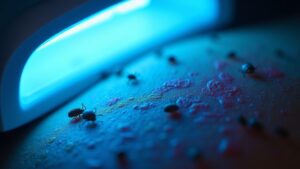
You’ve probably heard UV light can zap germs, but does it work on scabies? These tiny mites burrow under your skin, making them tough to reach-even for UV. While UVC can kill surface mites and clean your surroundings, it won’t touch the ones hiding deep. Some swear by UV as a cure, but that’s risky. Stick with proven treatments, and let’s clear up the myths so you don’t waste time on false hope.
Understanding Scabies and Their Resistance to UV Light
Scabies mites burrow into your skin, making them tough to target with UV light-no matter how strong it is. These tiny pests dig tunnels under your skin, causing intense itching and redness, but UV rays can’t reach them there.
Scabies mites burrow deep, evading UV light-no matter the intensity-while their tunnels trigger relentless itching and irritation.
While UV light kills bacteria and viruses on surfaces, it doesn’t penetrate deep enough to stop an infestation in human skin. Direct contact spreads scabies, and symptoms like rash and discomfort worsen with persistent exposure.
Even though you blast surfaces with UV light, the mites on your body won’t be affected. That’s why doctors prescribe scabicides-medicated creams or lotions-to kill them. Scratching spreads them further, so treating your skin, not just your surroundings, is key.
Don’t rely on UV light alone; it’s no substitute for proper treatment.
The Science Behind UV Light and Its Effects on Mites
Since UV light doesn’t reach scabies mites burrowed under your skin, you might be curious how it works against other mites.
UVC rays, a type of UV light, disrupt the DNA of microscopic organisms, making them a useful tool for environmental sanitation. However, scabies mites (Sarcoptes scabiei) aren’t easily targeted this way because they hide deep in your skin and spread through direct skin-to-skin contact.
Here’s how UV light affects mites in general:
- Kills Surface Mites: UVC rays at 254nm can neutralize dust mites on surfaces, but they won’t penetrate skin to reach scabies.
- Limited for Scabies: Unlike dust mites, scabies need dedicated treatments like creams or pills for effective eradication.
- Sanitation Aid: UV light helps clean environments but isn’t a standalone treatment option for scabies.
While UV light has its uses, it’s not the answer for scabies.
Common Myths About UV Light as a Scabies Treatment
Many people assume UV light can zap scabies mites away, but the truth isn’t that simple.
One common myth is that UV light kills scabies under your skin. In reality, mites burrow deep, making UV ineffective against the infestation.
Another myth? All UV types work. Only UVC has germ-killing power, but it can’t reach mites beneath your skin.
Some believe UV treatments replace conventional treatments like scabicides, but that’s risky-medical advice confirms they’re necessary.
Others consider UV prevents reinfestation, but thorough cleaning and proper treatment do that.
Finally, UV light isn’t a safe or effective standalone for scabies symptoms.
Stick to proven methods for skin infestations, and don’t fall for these myths. Your best bet? Trust science, not shortcuts.
Proven Treatments for Scabies Infestations
Several effective treatments can clear up a scabies infestation, but you’ll need the right approach to make it work. Scabies mites burrow under your skin, causing relentless itching and other symptoms, so treating them properly stops the transmission and eases discomfort. Here’s what works:
- Topical creams: Permethrin (5%) is the go-to treatment-apply it from neck to toes, leave it on for 8–14 hours, and repeat in a week to kill mites and eggs.
- Oral medication: For stubborn cases, ivermectin pills can be prescribed, particularly when topical treatments aren’t enough.
- Symptom relief: Even after treatment, itching may linger due to mite debris. Over-the-counter antihistamines or soothing lotions help while your skin heals.
UV light isn’t a proven fix, but these methods are. Stick to them, and you’ll beat the infestation.
Safety Considerations When Using UV Light for Skin Conditions
While UV light can help with certain skin conditions, it’s essential to use it safely-because getting it wrong can do more harm than good.
Always follow safety guidelines to avoid direct exposure to your skin and eyes, which can cause burns or damage. Wear protective eyewear to shield your vision, and use devices in well-ventilated areas to prevent harmful ozone buildup.
Keep in mind UV light’s effectiveness against scabies mites is limited, as it doesn’t reach deep enough to kill them. For skin health, combine UV treatment with non-invasive treatments for better results.
Stick to recommended usage times and distances to minimize risks. Prioritize safety considerations to guarantee you’re treating your skin without unintended side effects. Stay informed and cautious for the best results.
Conclusion
So, while UV light could zap surface germs like a warrior in a microscopic battle, it’s no knight in shining armor against scabies. Those stubborn mites burrow too deep, laughing at UV rays from their underground hideouts. Stick to the proven treatments-your skin deserves real relief, not myths. Trust science, skip the shortcuts, and let’s send those mites packing for good.

