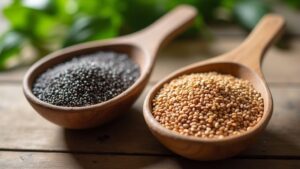
Picture your morning smoothie feeling more satisfying—chia seeds swelling up to keep you full, while flaxseeds blend in unnoticed but pack a hormonal punch. You’ve heard both are superfoods, but which one fits your health goals better? Chia’s quick-prep versatility works for busy folks, while flax’s grinding need rewards patience with deeper benefits. They share perks like heart support and digestion aid, but their concealed strengths could surprise you. Let us examine what each brings to your plate.
Omega-3 Fatty Acids: Heart Health and Inflammation Reduction
Should you be searching to boost your heart health and fight inflammation, chia seeds and flaxseeds pack a serious punch with their omega-3 fatty acids.
Both are loaded with alpha-linolenic acid (ALA), a plant-based omega-3 that supports your heart by lowering LDL cholesterol and blood pressure, reducing your risk of cardiovascular disease. Flaxseeds edge out chia seeds slightly in ALA content, but both deliver powerful anti-inflammatory properties to help combat chronic inflammation linked to conditions like arthritis.
Regular intake can slash inflammation markers, easing oxidative stress and protecting your heart. Sprinkle them on oatmeal, blend into smoothies, or mix into yogurt for an easy omega-3 boost. Their heart-healthy perks make them a smart addition to your diet, no matter which you choose.
Fiber Content: Digestive Health and Blood Sugar Control
You’ll find both chia and flaxseeds packed with fiber, keeping your digestion smooth and your blood sugar steady.
Chia seeds offer slightly more fiber per ounce, forming a gel in your stomach to help you feel full longer.
Flaxseeds, rich in mucilage, support gut health and slow sugar absorption, making them great for managing cravings.
Fiber Digestion Benefits
Both chia seeds and flaxseeds pack a serious fiber punch, making them great for your digestion and blood sugar. Their high fiber content keeps things moving smoothly in your gut, preventing constipation and supporting overall digestive health.
Here’s how these tiny seeds work marvels:
- Chia seeds absorb water, forming a gel that slows digestion and keeps you full longer.
- Flaxseeds contain mucilage, a soluble fiber that soothes your gut and promotes regularity.
- Both seeds bulk up stool, easing bowel movements naturally.
- Their fiber binds to cholesterol, helping lower LDL levels for better heart health.
- Regular intake can stabilize blood sugar by slowing carb absorption.
Whether you choose chia or flax, you’re giving your body a fiber boost that supports digestion, cholesterol, and long-term wellness.
Just recall to drink plenty of water to help the fiber do its job!
Blood Sugar Regulation
Fiber doesn’t just keep your digestion on track—it also plays a big role in balancing your blood sugar. Both chia seeds and flaxseeds are packed with high fiber, offering around 10 and 8 grams per serving, respectively.
Their soluble fiber slows digestion, helping one avoid blood sugar spikes after meals. Chia seeds’ gel-like consistency upon being soaked further stabilizes glucose by delaying stomach emptying. This makes them great for healthy blood sugar management, especially in the event you’re at risk for metabolic syndrome or type 2 diabetes.
Adding just 1-2 tablespoons daily to meals can help. Flaxseeds work similarly, blending easily into smoothies or yogurt. Either way, you’re giving your body a fiber boost that keeps energy steady and cravings in check.
Antioxidant Properties: Disease Prevention and Skin Health
Chia seeds and flaxseeds pack a serious antioxidant punch, helping your body fend off damage that can lead to chronic diseases while keeping your skin healthy.
These tiny powerhouses neutralize free radicals, unstable molecules that harm cells and contribute to aging and illness. By integrating them into your diet, you’re giving your body a natural defense against inflammation, heart issues, and even skin problems like eczema.
- Fight chronic diseases: The antioxidants in chia seeds and flaxseeds reduce oxidative stress, lowering risks like cardiovascular disease.
- Protect skin: Omega-3 fatty acids in both seeds hydrate and calm irritated skin.
- Combat inflammation: Their anti-inflammatory properties help soothe conditions like psoriasis.
- Boost heart health: Flaxseeds’ lignans could guard against hormone-related cancers.
- Slow aging: Antioxidants like quercetin in chia seeds keep skin youthful.
A small sprinkle can make a big difference for your health.
Protein and Amino Acids: Muscle Building and Satiety
Beyond their antioxidant benefits, chia seeds and flaxseeds can also give your muscles the nutrients they need to grow and keep you feeling full longer. Both pack about 5 grams of protein per ounce, making them great plant-based options for muscle building.
Chia seeds shine with all essential amino acids, helping repair and grow muscle tissue. Flaxseeds, while slightly lower in protein quality, boost satiety thanks to their mucilage content, which slows digestion.
The combo of protein and fiber in both seeds helps curb cravings, supporting appetite control and weight management. Whether you blend them into smoothies or sprinkle them on yogurt, their nutritional value keeps you energized longer, so you stay focused on your fitness goals without constant hunger pangs.
Calcium and Bone-Strengthening Minerals
As it pertains to keeping your bones strong, the minerals in chia and flaxseeds can make a real difference. Both superfoods pack a punch with their mineral composition, offering dietary calcium, magnesium, and phosphorus—key players for bone health.
Chia seeds stand out with higher calcium levels, while flaxseeds contribute trace minerals that complement their benefits.
- Chia seeds deliver over 600 mg of calcium per 100g, a plant-based powerhouse for bone strength.
- Flaxseeds provide 60 mg of calcium, still a solid addition to your diet.
- Both seeds are rich in phosphorus, vital for maintaining bone structure.
- Magnesium in chia aids calcium absorption, boosting its effectiveness.
Their combined health benefits make them a smart choice for long-term bone support.
Including these seeds in meals guarantees you’re nourishing your bones with essential nutrients.
Hormonal Balance and Lignan Benefits
Keeping your bones strong isn’t the only benefit these tiny seeds offer—they also play a role in balancing hormones, especially flaxseeds.
Packed with lignans, flaxseeds mimic estrogen, helping ease menopausal symptoms like hot flashes and supporting hormonal balance. Their antioxidant properties could even lower the risk of hormone-related cancers.
Chia seeds, while lower in lignans, shine with omega-3 fatty acids, which aid hormone production and regulation. Should you struggle with PMS or irregular menstrual cycles, flaxseeds might assist in stabilizing things.
Together, chia and flaxseeds create a powerful duo for hormone health. Sprinkle them on yogurt, blend into smoothies, or mix into oatmeal—just a small daily dose can make a big difference.
Your body will thank you for the extra support.
Versatility in Recipes and Daily Consumption
You can mix chia seeds into smoothies or oatmeal for a texture boost without changing the taste, while flaxseeds work best ground and added to yogurt or baked goods.
Aim for one to two tablespoons of either seed daily to get a solid dose of omega-3s, fiber, and protein.
Both are easy to sprinkle into meals, but chia’s gel-like consistency makes it ideal for puddings, while flaxseeds shine in recipes needing an egg substitute.
Recipe Integration Ideas
Adding chia seeds or flaxseeds to your meals doesn’t have to be complicated—they blend right into what you’re already eating.
These healthy seeds pack a punch of nutritional value, from dietary fiber to omega-3s, and their mild taste makes recipe integration a breeze.
Whether you’re boosting your smoothies or upgrading baked goods, they’re perfect for daily consumption.
- Smoothies: Toss in a tablespoon of chia seeds or ground flaxseeds for extra thickness and health benefits.
- Oatmeal: Stir them into your morning oats for a fiber-rich start.
- Baked Goods: Replace eggs with chia gel or flaxseed meal in muffins or pancakes.
- Yogurt or Salads: Sprinkle them on top for a crunchy, nutrient-packed twist.
- Energy Bites: Mix flaxseeds into no-bake bites or chia seeds into pudding for a healthy snack.
With so many options, it’s easy to enjoy their perks daily.
Daily Intake Recommendations
Since chia and flaxseeds pack so much nutrition into such small servings, it’s easy to overdo it—but sticking to the right amount guarantees you get the benefits without discomfort.
For chia seeds, aim for 1–2 tablespoons (10–20 grams) daily to harness their high fiber content, protein, and omega-3s. Flaxseeds offer similar nutritional value, but grinding them boosts absorption of alpha-linolenic acid and other nutrients—stick to the same portion size.
Both seeds work well in smoothies, oatmeal, or baked goods, but keep in mind their high fiber content means you’ll need extra hydration to avoid bloating.
Start small in case you’re new to them, and gradually increase to let your body adjust. Balanced intake makes certain you reap the health benefits without overloading your system.
Conclusion
So there you have it—chia and flaxseeds are like tiny nutritional powerhouses, packing a punch far bigger than their size. Whether you’re blending them into smoothies, sprinkling them on yogurt, or baking them into treats, these seeds deliver serious health perks without the fuss. Pick your favorite (or use both!) and let them work their magic. Your heart, gut, and even your taste buds will thank you. Now go grab a spoon and dig in!