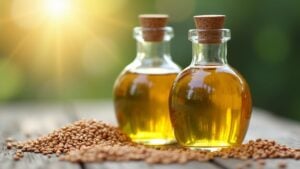
You’ve probably seen flaxseed oil in health stores and linseed oil in hardware aisles, but you may be curious regarding whether they’re the same thing. While both come from the flax plant, their uses and processing differ in ways that are significant for your health and home. Whether you’re adding it to smoothies or finishing wood furniture, comprehending these differences helps you make smarter choices-and avoid some surprising mix-ups.
Definitions and Terminology
Flaxseed oil and linseed oil can sound like two different things, but they actually come from the same plant-Linum usitatissimum.
The difference lies in terminology and use. You’ll hear “flaxseed oil” more in the U.S., where it’s cold-pressed for culinary applications like salads or smoothies.
“Linseed oil” comes from French and Latin roots and often refers to the version used in art and wood finishing.
Though both share the same source, their processing separates them-food-grade flaxseed oil keeps nutrients intact, while linseed oil could use harsher methods unsuitable for eating.
Names stick based on culture and purpose, but it’s all from the same humble seed. Just check the label to match your needs.
Comparison With Other Oils
Now that you know flaxseed and linseed oil come from the same plant but serve different purposes, let’s see how they stack up against other oils. Unlike flaxseed oil, which is rich in omega-3 fatty acids and used in food, linseed oil excels as a drying oil for wood treatment and artistic finishes. Boiled linseed oil, with added drying agents, cures faster than regular linseed oil, making it ideal for industrial use. Compared to olive or soybean oil, linseed oil has superior oxidative stability for protecting wood, while flaxseed oil’s nutritional benefits outshine most cooking oils.
| Feature | Linseed Oil | Flaxseed Oil |
|---|---|---|
| Use | Wood treatment, varnishes | Food, supplements |
| Drying Property | Yes (drying oil) | No |
| Omega-3 Content | Low | High |
| Safety | Fire risk if improperly stored | Safe for consumption |
| Processing | Often boiled for faster drying | Cold-pressed for purity |
Each has unique strengths, so choose the right one for your needs.
Kitchen Use and Safety
Should you contemplate using linseed oil in the kitchen, it’s essential to know which types are safe-because not all of them belong near food.
Raw linseed oil can be food-safe when it’s processed correctly, but industrial-grade versions could contain harmful residues. Always check the label to verify it’s meant for kitchen use.
Avoid using non-food-safe linseed oil on cutting boards or in culinary applications, as it could introduce potential toxicity. The source matters, too-opt for cold-pressed, unrefined linseed oil to guarantee purity.
While whole linseeds might carry natural toxins, properly sourced linseed oil is generally safe and has a mild taste, making it a subtle addition to dressings or dips.
Just double-check before you drizzle!
Characteristics and Properties
Since both oils come from the same plant, you could be curious what sets flaxseed oil and linseed oil apart-they’re similar, but their differences matter.
Flaxseed oil is typically cold-pressed, preserving its polyunsaturated fatty acids, and has a shorter shelf life since it’s meant for consumption. It stays liquid and won’t dry, making it ideal for salads or supplements.
Linseed oil, on the other hand, is a drying plant oil used in oil paints or wood finishes. It hardens over time due to oxidation, forming a protective layer.
While cold-pressed linseed oil is nearly odorless, boiled versions might smell like traditional art supplies. Flaxseed oil won’t darken wood like linseed oil does, which deepens the grain over time.
Common Myths and Misconceptions
You might consider flaxseed oil and linseed oil are the same thing-after all, they come from the same plant-but that’s where the confusion starts.
Many assume they’re interchangeable, but food-grade flaxseed oil is safe to eat, while industrial-grade linseed oil isn’t.
Some believe all linseed oil smells strong, but cold-pressed versions are nearly odorless.
Another myth? Boiled linseed oil is just heated raw oil-wrong. It often contains toxic additives, making it unsafe for food.
People also presume mineral oil is better for wood, but linseed oil actually protects and cleans better.
And no, linseed oil doesn’t always darken wood drastically-it depends on the type and how you apply it.
Recognizing these differences helps you choose wisely.