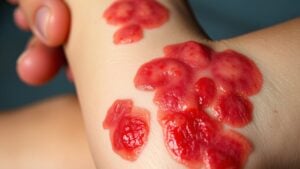
Should you notice a rash, don’t ignore it-some signs mean you need help fast. A fever with a rash could signal an infection, while one that covers most of your body could point to something serious. Painful blisters or a rash spreading quickly? That’s your cue to act. Swelling, bruising, or trouble breathing ramp up the urgency. Being aware of these red flags can make all the difference, so stay aware and trust your instincts. What comes next could save your skin-literally.
Fever Accompanying the Rash
A fever that shows up with a rash isn’t something to brush off-it’s often your body’s way of sounding an alarm. As your temperature climbs over 100.4°F and a rash appears, it could signal a hidden infection like measles or scarlet fever.
Your immune response kicks in to fight the issue, but waiting could make things worse. Sometimes, a rash with fever points to an allergic reaction, particularly in cases where you’ve started new meds.
Either way, don’t ignore it. Serious conditions can hide behind these symptoms, so urgent attention matters. Even though it feels mild, seeking medical care is smart-doctors can spot red flags you could overlook.
Listen to your body; quick action keeps small problems from becoming big ones.
Rash Covering Most of the Body
- A rash covering most of the body can escalate quickly, especially with breathing difficulties.
- It could stem from infections, allergies, or immune system issues.
- Watch for swelling, dizziness, or fever-these need urgent care.
- Even in case it doesn’t itch or hurt, don’t ignore it.
- Prompt treatment prevents complications, so act fast.
Painful Rash With Blistering
Should you notice a painful rash with blistering, it could signal severe skin reactions like shingles or dangerous drug allergies.
These blisters often point to fundamental infections or autoimmune issues that need quick attention.
Don’t wait-emergency treatment can prevent complications and speed up recovery.
Severe Skin Reactions
Whenever your skin breaks out in painful blisters, it’s more than just uncomfortable-it could signal a serious condition that needs quick medical attention.
A blistering rash may stem from severe health conditions like Stevens-Johnson syndrome or shingles, both requiring immediate medical attention to prevent complications. Ignoring it could lead to secondary infections or worsen fundamental issues.
Here’s what you should know:
- Painful blisters often indicate serious reactions, like Stevens-Johnson syndrome, needing emergency care.
- Antiviral treatments can help in case the rash is caused by infections like shingles.
- Watch for signs of infection, such as pus or increased redness, which need antibiotics.
- Don’t pop blisters-it raises the risk of secondary infections.
- Seek help fast-delaying care can make blistering rashes harder to treat.
Acting quickly can ease discomfort and prevent long-term damage.
Underlying Infections Identified
Since painful rashes with blistering often point to serious infections or reactions, it’s essential to recognize at the moment your skin is signaling more than just irritation.
A blistering rash-especially one that’s painful or spreads rapidly-could mean foundational infections like shingles or herpes simplex virus are at play.
Even worse, it may hint at severe drug reactions like Stevens-Johnson syndrome or toxic epidermal necrolysis, both life-threatening conditions needing urgent medical evaluation.
Should you notice systemic symptoms like fever alongside the rash, don’t wait. These combinations often indicate your body’s fighting something serious, and immediate assessment is key.
Ignoring rapid spreading or intense discomfort can lead to dangerous complications, so trust your instincts and seek help fast.
Your skin’s trying to tell you something-listen.
Emergency Treatment Necessary
A painful rash with blistering isn’t something to brush off-it’s often your body’s way of sounding the alarm for serious conditions like shingles, severe medication reactions, or dangerous infections.
Should you notice blisters forming, especially with pain or systemic symptoms like fever, don’t wait-seek urgent medical evaluation. Some blistering rashes, like Stevens-Johnson syndrome, require emergency treatment to prevent life-threatening complications.
- Act fast: A blistering rash with pain could mean a serious infection needing prompt medical intervention.
- Watch for warning signs: Fever, chills, or spreading redness signal trouble.
- Don’t ignore meds: Severe reactions to drugs can trigger blistering rashes.
- Antiviral treatment helps: Initial care for shingles or herpes reduces suffering.
- Avoid long-term issues: Delaying care risks chronic complications like nerve pain.
Your health matters-get help right away.
Rapidly Spreading Rash
Should your rash be spreading fast, don’t ignore it-this could be a sign of infection or a serious allergic reaction.
Look for redness, warmth, or pain in the area, as these clues mean you need emergency care. Acting quickly can prevent complications and get one the help needed.
Signs of Infection
At the moment a rash starts spreading fast-like hives appearing in minutes or redness widening over hours-it’s your body’s alarm system blaring. Rapidly spreading rashes often signal a severe infection or acute allergic reaction needing medical attention.
Don’t ignore these signs; they can escalate quickly.
- Deep redness or warmth: The skin could feel hot, look angry, and throb-clear signs of infection.
- Swelling or tightness: When the area puffs up fast, it’s a red flag for trouble brewing.
- Pain or tenderness: A rash that hurts more than itches might mean a deeper issue.
- Fever or chills: Your body’s fighting something big-don’t wait it out.
- Pus or oozing: Yellow or green fluid means bacteria’s winning; get help now.
An untreated rash can turn dangerous fast. Trust your gut-should it look bad, act fast.
Emergency Care Needed
As a rash spreads faster than one can track it-covering new skin in minutes or hours-your body is screaming for help. A rapidly spreading rash isn’t just uncomfortable; it’s often a red flag for serious issues like allergic reactions, infections, or Stevens-Johnson syndrome.
Should you notice fever, swelling, or difficulty breathing alongside the rash, don’t wait-get emergency care immediately. These symptoms can signal life-threatening conditions like anaphylaxis or severe infections needing prompt treatment.
Even without breathing trouble, a rash that grows quickly demands immediate medical attention to rule out dangerous causes. Trust your gut-whenever something feels off, head to the ER. Delaying could worsen the problem, so act fast to protect your health.
Your skin’s trying to tell you something-listen.
Rash With Swelling or Bruising
Upon a rash shows up with swelling or bruising, it’s usually your body’s way of signaling something serious-like an allergic reaction or a fundamental condition that needs quick care.
Don’t ignore these signs, as they could point to issues like hives, vasculitis, or even anaphylaxis.
Swelling often means your immune system’s overreacting, while bruising could hint at deeper problems like skin lesions or reactions to insect bites.
Whatever the cause, immediate medical attention is key to avoiding complications.
- Hives: Raised, itchy welts signaling an allergic reaction.
- Vasculitis: Purplish spots from inflamed blood vessels.
- Anaphylaxis: Severe swelling, especially in the throat-act fast.
- Insect bites: Bruising could mean a toxic reaction.
- Underlying issues: Persistent swelling or bruising might need deeper investigation.
Listen to your body-it’s smarter than you realize.
Difficulty Breathing Alongside Rash
Should you notice a rash appearing while also struggling to catch your breath, your body is sounding a serious alarm-this combo often signals anaphylaxis, a life-threatening allergic reaction that demands fast action.
Difficulty breathing with a rash isn’t just uncomfortable; it’s a red flag for respiratory distress, especially when swelling (like in your face or throat) worsens quickly. Don’t wait to see whether symptoms improve-seek immediate medical attention.
Anaphylaxis can escalate within minutes, and epinephrine (like an EpiPen) might be needed to reverse the reaction. Other signs include dizziness or a racing heart.
In the event you’ve had allergic reactions before, carry emergency meds and tell others what to do. Urgent care is non-negotiable here-your safety comes initially.