

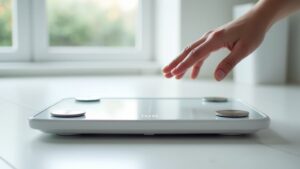
Bioelectrical impedance analysis (BIA) offers a deeper look into weight loss than a scale alone. By sending a harmless electrical current through the body, it measures resistance to estimate body fat, muscle mass, and hydration levels. While not perfect, BIA helps track whether weight loss comes from fat or muscle-a key detail most scales miss. Beyond BMI, it provides clearer health insights, though its accuracy depends on consistency. Comprehension of its strengths and limits can guide smarter progress tracking.
How Bioelectrical Impedance Analysis Measures Body Composition
Bioelectrical impedance analysis (BIA) gives a closer look at what’s happening inside the body by measuring how it responds to a tiny electrical signal. The method examines impedance, or resistance, as the current passes through tissues.
Since fat slows the signal more than muscle or water, BIA estimates body composition-like body fat percentage and total body water-by combining this electrical measurement with factors like height, weight, and age. Devices use foot or hand electrodes to send the harmless current through the body.
Though hydration status can skew results, BIA remains a practical tool for tracking changes over time. Proper hydration and consistency-testing at the same time of day-improve accuracy. Comprehending how BIA works helps users interpret data without fixating on single readings.
The Role of Body Fat vs. Muscle in Weight Loss Tracking
Knowledge of body composition extends beyond simple scale numbers, particularly as monitoring weight reduction. Fat and muscle play distinct roles, yet scales often lump them together. Bioelectrical impedance analysis (BIA) reveals concealed details by measuring body water (TBW), fat-free body mass (like muscle mass), and body fat percentage. This helps distinguish fat loss from muscle loss-key for sustainable results. For example, someone gaining muscle may see stalled weight loss, though their body composition improves.
| Metric | What It Tells You |
|---|---|
| Body Fat Percentage | Fat vs. lean tissues ratio |
| Muscle Mass | Strength, metabolism support |
| Fat-Free Mass | Bones, organs, water-total non-fat weight |
| TBW | Hydration impact on measurements |
Understanding these differences prevents discouragement and guides smarter adjustments.
Why BIA Outperforms BMI for Health Assessments
Whenever it comes to measuring health, not all methods are created equal. While BMI relies solely on height and weight, bioelectrical impedance analysis (BIA) offers a deeper body composition assessment by measuring body fat percentage, fat-free mass, and hydration levels.
Unlike BMI, BIA detects normal-weight obesity-where someone appears healthy but carries excess fat-and distinguishes between subcutaneous fat (under the skin) and visceral fat (around organs), which is linked to higher health risks. It also tracks body composition changes over time, even if weight stays the same.
Though not as precise as dual-energy X-ray absorptiometry, BIA provides actionable insights without complex procedures. For those aiming to understand their health beyond a simple number, BIA delivers a clearer, more personalized image.
Understanding the Accuracy and Limitations of BIA
How reliable is bioelectrical impedance analysis as it pertains to measuring body composition? While bioelectrical impedance models are convenient for estimating body fat, their accuracy varies. Clinical-grade devices use sophisticated impedance models to measure total body water and forecast fat-free body mass, but they can underestimate fat mass compared to gold-standard methods like DXA.
The validity of bioelectrical impedance also depends on hydration, with dehydration skewing results. Consumer devices often have wider margins of error-up to ±10%-making them less precise for individual tracking. Factors like recent meals, exercise, and ethnicity further influence the accuracy of the measurement.
While useful for group trends, bioelectrical impedance analysis might not be ideal for personal body composition assessments, especially in cases of severe obesity or fluctuating hydration.
Practical Ways to Use BIA for Weight Loss Progress
Despite its limitations, bioelectrical impedance analysis (BIA) can still be a helpful tool for tracking weight loss progress when used thoughtfully. To get the most accurate body fat measurement, users should take readings at the same time of day, preferably in the morning, to minimize fluctuations in total body water. Consistency is key-track changes over time rather than focusing on single readings.
BIA devices send a small electrical current through the body to assess body composition, so staying hydrated but avoiding excess fluids before testing improves reliability. Pairing BIA with other methods, like waist measurements or progress photos, provides a fuller depiction of changes in body composition. Monitoring fat-free body mass helps ensure weight loss comes from fat, not muscle. Regular use helps measure changes and adjust goals effectively.
Conclusion
While scales obsess over numbers, BIA whispers secrets-revealing whether shrinking digits mean lost fat or vanishing muscle. It demystifies the silent battle between meaningful progress and empty victories. Yet for all its insight, the technology remains imperfect, offering guidance rather than gospel. Pair it with smart habits, and suddenly weight loss transforms from a guessing game into a strategic expedition where every gram tells a story the scale alone could never narrate.

