

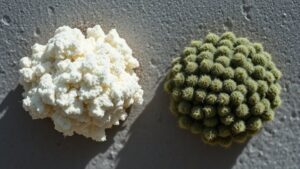
You may ponder mold and mildew are the same, but they’re not-and understanding the difference can save your health and home. Mold lurks in damp, concealed spots, looking fuzzy or slimy, while mildew sits on surfaces as a powdery patch. One causes serious damage; the other wipes away easily. The risks they pose aren’t equal either. Should you have ever contemplated which one’s invading your space-or how to stop it-you’re about to get the answers.
Appearance and Visual Differences Between Mold and Mildew
You could spot mold or mildew in damp spots around your home, but they don’t look the same.
Mold often appears fuzzy or slimy and can grow in various colors-green, black, blue, or even yellow. It tends to penetrate surfaces, making cleaning tougher.
Mildew, on the other hand, looks powdery and flat, usually starting white before turning brown or gray. It mostly stays on the surface, so scrubbing it away is easier.
The visual differences help you decide how to tackle them. Mold’s deeper growth means it could leave stains or damage, while mildew usually wipes off without much trouble.
Pay attention to their appearance-knowing whether it’s fuzzy mold or powdery mildew saves you time and effort during cleaning.
Growth Conditions and Common Locations
You can spot mildew in damp, humid spots like your shower or windowsills, while mold often lurks in concealed areas with poor airflow, like under sinks or behind walls.
Both need moisture to thrive, but they prefer different surfaces-mildew grows on organic materials or hard surfaces, and mold digs deeper into porous items like drywall or carpets.
Keeping humidity low and fixing leaks fast helps stop both from taking over your home.
Moisture Requirements
Since both mold and mildew thrive in damp environments, controlling moisture is key to keeping them at bay.
You’ll often find mildew growth on damp surfaces like shower walls or windowsills, where humidity levels stay high. Mold growth, on the other hand, prefers concealed moist environments-think under sinks or inside walls-where it can dig deeper.
To prevent mold and mildew, keep indoor humidity levels low (below 60%) by using dehumidifiers or proper ventilation. Wipe down damp surfaces quickly, and fix leaks to stop moisture buildup.
Should you spot mildew, scrub it away with a simple cleaner, but mold removal may need stronger solutions to clean the mold safely. Ignoring it raises health risks, so act fast!
Surface Preferences
Though mold and mildew both love damp spots, they don’t grow in the same way or show up in the same places.
Mildew thrives on flat, moist surfaces like shower tiles or windowsills, sticking to the top layer where it’s easy to spot and remove.
Mold, though, digs deeper into organic materials like wood or drywall, making it trickier to clean.
You’ll often find mildew in high-humidity areas like bathrooms, while mold hides in darker, less-ventilated spots.
Both need moisture levels to stay high, but mildew’s surface-level growth means a quick scrub could do the trick.
Mold, on the other hand, can linger even after cleaning unless the damp conditions aren’t fixed.
Keep an eye on those damp surfaces to stop both from spreading.
Problem Areas
Damp, neglected corners of your home are prime real estate for mold and mildew. Both thrive in problem areas with high humidity, like bathrooms, kitchens, and basements, where moisture control is often lacking.
Mildew loves shower walls, windowsills, and fabrics, while mold prefers concealed spots-under sinks, behind furniture, or in poorly ventilated spaces. Should you notice discoloration or a musty smell, it’s time to act.
Poor ventilation worsens mold growth, raising risks of health problems when left unchecked. Regularly clean mold-prone surfaces, fix leaks, and use exhaust fans to cut humidity.
Common household spots like laundry rooms or attics also need attention. Stay proactive-simple steps keep these unwelcome guests from settling in.
Health Risks and Symptoms of Exposure
You may notice allergic reactions like sneezing or rashes when you’re exposed to mold, while mildew often causes milder respiratory discomfort.
Toxic molds, like Stachybotrys, can lead to serious health issues, particularly in case you have asthma or weakened immunity.
Should you be coughing or feeling congested around damp areas, it could be a sign of concealed mold growth affecting your health.
Allergic Reactions
Exposure to mold and mildew can trigger allergic reactions, and should you be managing persistent sniffles or skin irritation, these unwelcome growths could be the culprits. Should you be allergic to mold, you could notice symptoms like sneezing, itchy eyes, or even asthma attacks flaring up. Mildew exposure tends to be milder, but it can still cause throat irritation or coughing, especially in damp environments. Over time, repeated mold exposure could lead to chronic health issues, so it’s smart to address the problem promptly.
| Symptom | Mold Exposure | Mildew Exposure |
|---|---|---|
| Sneezing | Common | Rare |
| Skin Irritation | Frequent | Occasional |
| Headaches | Possible | Unlikely |
| Asthma Flare-ups | High Risk | Low Risk |
| Nasal Congestion | Very Likely | Mild |
Should these symptoms sound familiar, it’s time to check your space for concealed growth.
Respiratory Issues
Breathing problems don’t always come from seasonal allergies-sometimes, mold and mildew are to blame.
Should you be coughing, sneezing, or wheezing more than usual, exposure to mold could be irritating your respiratory system. Mold spores can trigger allergy symptoms, worsen asthma, or even lead to bronchitis, especially in case you’re sensitive. Mildew is less harmful but can still cause a sore throat or mild coughing.
The longer you’re around these fungi, the worse your health problems could get. Kids and older adults are especially at risk, so don’t ignore persistent symptoms.
In the event that you suspect mold or mildew in your home, act fast-remediation can clear the air and help you breathe easier. Your lungs will thank you.
Toxic Mold Dangers
Several types of toxic mold, like black mold (Stachybotrys), can cause more than just a stuffy nose-they can trigger serious health problems should they be left unchecked. Should you be exposed to mold spores, especially from black mold, you may experience coughing, headaches, or even skin rashes. Prolonged exposure can worsen asthma or lead to lung inflammation, particularly in poorly ventilated spaces. Mold thrives on organic materials like wood or drywall, so it’s essential to remove mold quickly to avoid health risks.
| Symptom | Cause | Action to Take |
|---|---|---|
| Coughing | Inhaling mold spores | Improve ventilation |
| Headaches | Toxic mold exposure | Remove mold immediately |
| Skin irritation | Contact with spores | Wear protective gear |
| Fatigue | Prolonged exposure | Consult a doctor |
Don’t ignore mildew spores either-they’re less harmful but still need attention. Take action to keep your home safe.
Damage Potential to Surfaces and Structures
At the time it comes to damage, mold and mildew aren’t on the same level-one can silently weaken your home, while the other mostly just looks unsightly.
Mold damage goes deep, breaking down porous materials like wood and drywall, leading to serious structural damage unless left unchecked. It thrives on organic materials and spreads fast, making prompt identification essential.
Unlike mold, mildew affects only surface layers, so cleaning is simpler, and it won’t compromise your home’s integrity.
Mold growth can also trigger health problems, while mildew’s impact is mostly cosmetic.
Should you spot dark patches or a musty smell, act fast-mold digs in, but mildew stays superficial.
Recognizing the difference helps you tackle the right problem before it gets worse.
Effective Cleaning Methods for Each
| Surface Type | Cleaning Method |
|---|---|
| Hard Surfaces | Bleach solution or hydrogen peroxide |
| Mold on Hard | Undiluted vinegar or hydrogen peroxide |
| Soft Surfaces | Professional cleaning recommended |
| Small Mildew | Household products like vinegar |
| Large Infestation | Call a specialist for mold remediation |
Stick to these methods for safer, effective cleaning.
Prevention Strategies for Mold and Mildew
Since mold and mildew thrive in damp, poorly ventilated spaces, keeping your home dry and well-aired is the best way to stop them before they start. Control humidity levels-aim for 30-50%-using dehumidifiers or air conditioners to prevent excess moisture.
Ventilate high-humidity areas like bathrooms and kitchens by running exhaust fans or opening windows. Regular inspections help catch leaks promptly; check plumbing, roofs, and basements for water damage. Fix any leaks immediately to avoid organic materials becoming breeding grounds.
Improve airflow with fans or by rearranging furniture to let air circulate. Wipe down wet surfaces, like shower walls, to reduce lingering moisture.
These steps protect your health by preventing mold and mildew from taking hold. Stay proactive-small repairs now save big headaches later.
When to DIY vs. Seek Professional Help
While tackling mold or mildew, comprehending the right moment to roll up your sleeves and the appropriate time to call in the pros can save you time, money, and hassle.
Small patches of mildew are often manageable with a simple area with clean solution, but a serious mold problem demands attention.
Here’s the time to DIY and the time to hire a professional:
1. Size Matters: Should the affected area be under 10 sq. ft., you can likely handle it yourself.
Larger infestations? Time to call the experts.
2. Hidden Trouble: Mold in walls or HVAC systems needs professional mold removal to avoid health problems.
3. Health Risks: Exposure can cause respiratory issues-don’t risk it should you be unsure.
4. Prevention: Pros help prevent recurrence by fixing moisture sources.
At the point when mold can cause structural damage or health concerns, don’t hesitate-hire a professional.

