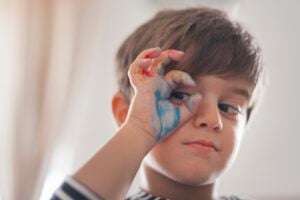
Retinitis pigmentosa in children is an inherited condition that slowly damages the retina, leading to vision loss over time. Initial signs include trouble seeing at night, difficulty adjusting to dim light, or bumping into objects. Genetic testing and specialized eye exams can confirm the diagnosis, helping families prepare for the challenges ahead. While there’s no cure yet, early identification opens doors to emerging treatments, assistive tools, and support systems that can make a real difference. Comprehending the condition sooner rather than later gives children the best chance to adapt and thrive.
Retinitis Pigmentosa in Children
How does retinitis pigmentosa (RP) affect children, and what can families do to navigate this condition? RP is an inherited disorder causing gradual vision loss as rod cells-responsible for night vision-break down. Children may struggle in dim light or bump into objects due to peripheral vision loss.
Early detection through genetic testing or eye exams helps families prepare. A genetic counselor can explain inheritance patterns and guide decisions. While symptoms vary, adapting the home and using low-vision tools can ease daily challenges. Families should prioritize routines and encourage independence.
Emotional support is key, as RP’s slow progression allows time to adjust. Open communication with teachers and doctors ensures children receive needed accommodations. Though RP has no cure, proactive care helps maximize quality of life.
Recognizing Early Signs and Symptoms
Children with retinitis pigmentosa often struggle with night vision difficulties, bumping into objects in dimly lit areas or hesitating to move in the dark.
They can also experience peripheral vision loss, missing objects or people to their sides even in well-lit environments. These initial signs, though subtle, warrant a thorough eye exam to rule out or confirm the condition.
Night Vision Difficulties
Recognizing the initial signs of night vision difficulties can be unsettling for both kids and their families, especially when simple tasks like traversing dimly lit rooms become a challenge.
In the early stages of adolescence, night vision problems often begin with children struggling to adjust to darkness, taking longer than usual to see things clearly after lights dim. They may encounter furniture or stumble over objects, leading parents to label them as clumsy.
Trouble seeing things in low light or losing the ability to distinguish shapes at dusk are initial signs parents shouldn’t overlook. While vision loss progresses differently for each child, noticing these subtle changes-like difficulty reading in dim lighting-can prompt earlier testing.
Addressing night vision challenges promptly helps tailor support systems before further complications arise.
Peripheral Vision Loss
As children with retinitis pigmentosa adjust to nighttime vision challenges, another change often follows-areas of sight fading at the edges. Peripheral vision loss can make it hard to spot objects or people to the sides, affecting activities like sports or navigating crowded spaces.
Blind spots may appear, and dim light vision often worsens alongside this decline. Parents might notice their child bumping into furniture or missing objects just outside their central gaze. Timely reporting of these signs to an eye doctor is crucial for diagnosis and intervention.
While retinitis pigmentosa progresses, adaptation strategies-like turning the head to scan surroundings-can help maximize remaining eyesight. Recognizing these changes early on ensures better support for a child’s daily life and long-term vision needs.
The Genetic Basis of Retinitis Pigmentosa
Retinitis pigmentosa in children stems from inherited retinal disorders caused by specific gene mutations. These mutations can follow different inheritance patterns, making family history a key factor in comprehending a child’s condition.
Genetic testing helps pinpoint the exact cause, offering insights into prognosis and potential treatments.
Inherited Retinal Disorders
Many inherited retinal disorders stem from genetic flaws, and retinitis pigmentosa stands out as one of the most complex. This condition primarily affects rod cells, which are pivotal for night vision, and later damages cone cells, leading to progressive vision loss.
Prompt detection through genetic testing can identify the specific mutation, helping families understand the disease’s trajectory and examine potential treatments like gene therapy.
- Genetic roots: Over 100 genes are linked to retinitis pigmentosa, making it a highly variable disorder.
- Symptoms: Night blindness and peripheral vision loss often appear initially, with central vision deteriorating over time.
- Family planning: Knowing the inheritance pattern (autosomal dominant, recessive, or X-linked) helps parents assess risks for future children.
Understanding these factors empowers families to seek timely care and stay informed about emerging therapies.
Gene Mutations Impact
Because genes act as the body’s instruction manual, even small errors in their code can have far-reaching effects-especially in conditions like retinitis pigmentosa. This inherited disease occurs when mutations disrupt the function of rod cells in the retina, which are indispensable for night and peripheral vision.
Over 60 genes have been linked to retinitis pigmentosa, each affecting vision differently. Some mutations cause initial symptoms like difficulty seeing in dim light, while others progress more gradually. Genetic testing can identify these mutations before severe vision loss occurs, offering families clarity about the condition’s inheritance pattern.
Though pigmentosa is incurable, prompt detection helps manage symptoms and opens doors to emerging therapies. Comprehending the specific gene involved allows doctors to predict the disease’s course and tailor care for each child.
Family History Relevance
Comprehension of how retinitis pigmentosa progresses through generations helps clarify why some children acquire it while others do not. The condition runs in families, but even without a family history, a child shows symptoms if they inherit certain RP gene mutations. Genetic testing can tell whether RP runs in the family and how likely other children in your family are to develop it.
Patterns Matter: If one parent carries the gene, children in your family are likely at risk, though symptoms differ.
Silent Carriers: Some relatives may carry the gene without symptoms, unwittingly passing it on.
Unexpected Cases: Nearly half of RP cases occur without a family history, making timely checks crucial.
Understanding family history or a health record helps spot risks sooner, guiding prompt care.
Diagnostic Tests and Procedures
Detecting Retinitis Pigmentosa in children involves several key tests and procedures to catch the condition prematurely. An eye specialist might order genetic testing to find specific gene defects like RPE65, which can tell whether the condition runs in the family or happens sporadically.
Diagnostic testing for Usher syndrome is also recommended if hearing loss is present. Electroretinography measures retinal cell responses, while optical coherence tomography provides detailed images of the retina. Visual field testing checks peripheral vision loss, a common initial sign. Fluorescein angiography can assess blood flow in the retina, revealing damage.
Consulting a genetic counselor helps families understand inherited retinal conditions and plan accordingly. Prompt diagnosis through these methods allows for timely support and management.
Current Treatment Options and Therapies
Key options include:
- Gene therapy: Targets specific genetic mutations to slow or halt vision impairment.
- Stem cell therapy: Investigational treatments aiming to repair damaged retinal cells.
- Low-vision rehabilitation: Helps children adapt to changing sight with tailored strategies.
Research continues into new emerging therapies, providing optimism for families managing retinitis pigmentosa. Prompt intervention maximizes the benefits of available treatments.
The Role of Assistive Devices and Low-Vision Aids
Several tools and strategies can help children with retinitis pigmentosa (RP) maintain independence despite vision challenges. A low-vision specialist can recommend assistive technologies like screen magnifiers or text-to-speech software to improve access to learning materials. Orientation and mobility training teaches safe navigation, while specialized lighting and glare control reduce discomfort. Reading stands and other low-vision aids help children maximize remaining vision for daily tasks. Initial use of these assistive devices supports confidence and independence.
| Tool | Purpose |
|---|---|
| Screen magnifiers | Enlarge text and images |
| High-contrast keyboards | Improve visibility of keys |
| Glare-control filters | Reduce eye strain |
| Text-to-speech software | Convert written words to audio |
These adaptations empower children with RP to engage more fully in school and daily life.
Supporting a Child With Retinitis Pigmentosa
Parents often notice the preliminary signs of retinitis pigmentosa (RP) in children as little ones struggle to see in dim light or bump into objects at home. Supporting a child with RP involves adapting to their changing needs while fostering independence. Early diagnosis helps families plan for safety, communication, and education.
Safety at home: Reduce tripping hazards, use high-contrast markings, and guarantee well-lit pathways to help a child navigate despite night blindness and peripheral vision loss.
Communication: Teach tactile or auditory cues if vision declines, especially if RP is linked to genetic conditions like Usher syndrome.
Hope through research: Examine clinical trials tailored for children, which might slow vision loss and improve long-term results.
Understanding the genetic basis of RP also helps families make informed decisions about future pregnancies.
Conclusion
The road ahead for children with retinitis pigmentosa is uncertain, but hope glimmers on the horizon. With prompt identification, families gain power-power to slow the darkness, adapt with courage, and welcome emerging science. Every moment of vision preserved is a victory. While the future remains veiled, one truth shines bright: acting now can rewrite the story. The clock is ticking-will the next breakthrough arrive in time?